


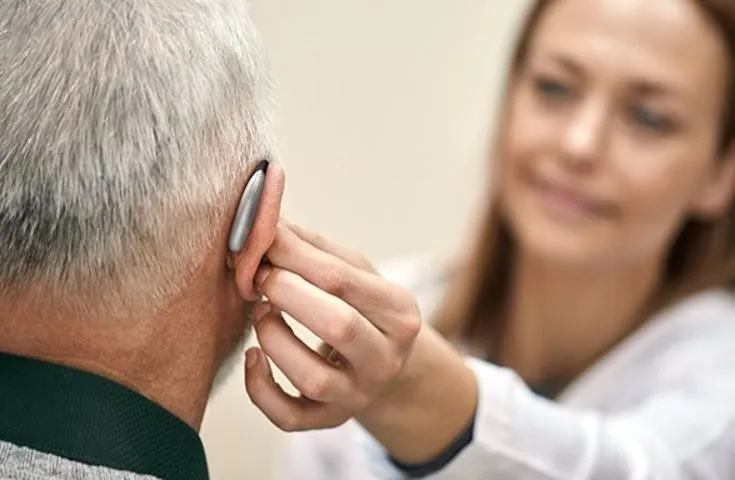
Why You Shouldn’t Delay Hearing Problems
Hearing loss is often not taken seriously by people. We tend to think, “I’m managing for now,” but in reality, this issue quietly reduces our quality of life. Imagine sitting with your friends at a table, but missing half of the conversation. At first, it may seem like a small issue, but over time it can lead to social withdrawal, decreased self-confidence, and even psychological problems.
Looking at modern statistics, we see that hearing problems have become a global issue. Today, millions of people around the world use hearing aids, and this number is increasing every year. The main reason for this is both the advancement of technology and the growing awareness among people. Today, using a hearing aid is no longer seen as a sign of aging, but rather as a smart choice that improves quality of life.
The most important point is this: hearing loss worsens if it is delayed. The brain begins to “forget” the sounds it does not hear. This means that the longer you delay taking action, the harder adaptation will be. Therefore, taking timely action is important both for your health and psychological comfort.
What is a Hearing Aid and How Does It Work?
A hearing aid is not just a small device. It is a bridge that allows you to hear the world again. These devices receive sound, process it, and deliver it to your ear in a way that is adjusted to your hearing level.
Today’s devices are very intelligent. For example, they:
- Automatically reduce background noise
- Highlight speech sounds
- Connect directly to your phone
Some modern models can even recognize more than 200 different sound environments and automatically adapt to them. What does this mean? Whether you are in a restaurant, on the street, or at home, the device adjusts itself without requiring manual changes.
Technology has advanced so much that these devices can now “learn” from the user and adapt over time based on individual hearing habits.
Tip 1 – Don’t Buy Without Accurate Diagnosis
The biggest mistake is buying a device without testing. This is like buying glasses without knowing your eye prescription.
Tests such as audiometry and tympanometry accurately determine your hearing level. Each person’s hearing loss is different, and the device must be selected accordingly.
Experts also state that proper device selection requires an accurate diagnosis. Otherwise, the device may either not work effectively or may cause discomfort.
Tip 2 – Don’t Be Fooled by Price
“I’ll just buy something cheap to get by” — this approach does not work for hearing aids.
In today’s market, there is a significant difference between mid-range and premium devices, and this difference comes from technology. Cheap devices simply amplify sound, while premium ones:
- Filter sound
- Use artificial intelligence
- Provide more natural hearing
In other words, price equals quality + technology + comfort.
Tip 3 – Choose According to Your Lifestyle
Not every device is suitable for every person. If you have an active lifestyle (meetings, social environments), you need a more advanced and intelligent device.
But for someone with a calmer lifestyle, a simpler model may be enough. It’s like choosing a car — you need different models for city driving and off-road conditions.
Tip 4 – Pay Attention to Technology
Today’s hearing aids are like mini computers. The most important features include:
- Bluetooth connectivity
- Artificial intelligence
- Noise cancellation
These features significantly improve ease of use and performance.
Tip 5 – Comfort and Design Matter
You will use the device for many hours during the day. Therefore, comfort is extremely important.
There are two main types:
| Type | Advantage | Disadvantage |
|---|---|---|
| In-ear | Invisible, aesthetic | Smaller battery |
| Behind-the-ear | Powerful performance | More visible |
The choice depends on your priorities.
Tip 6 – Service and Warranty
Buying a device is only the beginning. The real issue is ongoing support.
Hearing aids require regular adjustments. For this reason, service and technical support are very important.
Tip 7 – There Must Be a Trial Period
Even the best device may not feel perfect on the first day. The brain needs time to adapt to new sounds.
This process is called the adaptation period and may take several weeks. Therefore, choose centers that offer a trial period.
Most Common Mistakes
- Buying without testing
- Focusing only on price
- Choosing low-quality brands
- Ignoring service
These mistakes lead to both financial loss and disappointment.
Hearing Aid Comparison (Table)
| Type | Advantage | Disadvantage |
|---|---|---|
| In-ear | Invisible, aesthetic | Smaller battery |
| Behind-the-ear | Powerful performance | More visible |
💙 About Avaz Hearing and Speech Center
If you are looking for accurate diagnosis, high-quality devices, and professional service, Avaz Hearing and Speech Center is one of the reliable choices in this field. The center provides hearing tests (audiometry and tympanometry) and personalized device selection.
One of the main advantages is the individual approach. Each patient receives a device tailored to their needs, along with continuous support during the usage process. This helps users adapt comfortably and achieve maximum results.
🔊 Hearing Devices Offered at the Center
The hearing devices available at Avaz center are equipped with modern technology and offer many advantages:
- Water-resistant models – safer for daily use
- Bluetooth support – easy connection with phones and other devices
- Artificial intelligence – automatic adaptation to sound environments
- Premium design – both aesthetic and comfortable
These devices are available in both in-ear and behind-the-ear models, selected according to the user’s needs.
💳 Payment Convenience and Additional Services
For many people, price is a barrier when buying hearing aids. At Avaz center, this issue is addressed by offering credit options, making it easier for everyone to access quality devices.
Additionally, the center provides:
- Free initial consultation
- Professional guidance
- Post-sale technical support
Conclusion
Buying a hearing aid is not just a purchase — it is an investment in your quality of life. When you make the right choice, you don’t just hear better, you live better.
Remember: the right device reconnects you with the world.
FAQ – Frequently Asked Questions
1. How long does it take to get used to a hearing aid?
It usually takes between 1 to 3 weeks.
2. Is a hearing aid visible?
In-ear models are almost invisible.
3. How long does the battery last?
Depending on the model, it lasts between 3 to 10 days.
4. Can I talk on the phone with it?
Yes, with Bluetooth you can connect directly.
5. Is service important?
Yes, it is very important for long-term use.