


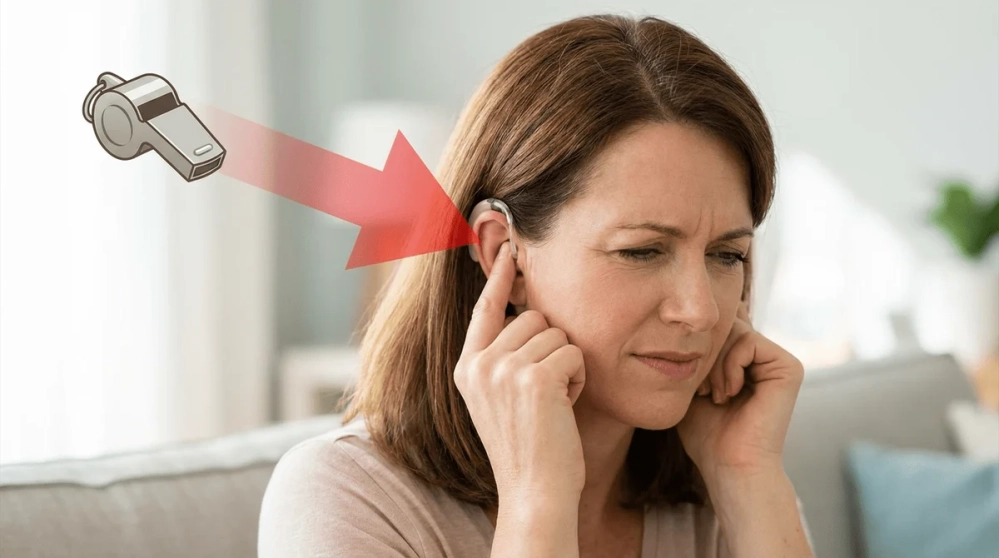
What Is the Whistling Sound in a Hearing Aid and Why Does It Occur?
One of the most common problems faced by people who use hearing aids is a whistling sound coming from the hearing aid. Sometimes this sound can only be heard for a few seconds when putting the device on the ear, while in other cases it may continue during conversations, eating, moving the head, or even in a quiet environment. If you are also looking for answers to questions such as “Why is my hearing aid whistling?”, “What should I do if my hearing aid makes a whistling sound?”, or “How can I stop my hearing aid from whistling?”, this article has been prepared specifically for you. In fact, a whistling sound does not always mean that the hearing aid is damaged; more often, it may be related to the way the device is positioned in the ear, the condition of the ear canal, the fit of the ear mold, the condition of the filter and sound tube, or the programming of the device. Phonak’s support materials also identify incorrect placement of the hearing aid and earwax in the ear canal among the possible causes of whistling.
The important point here is that a whistling hearing aid should not simply be interpreted as “the device is broken.” A hearing aid is a highly sensitive electronic system: the microphone picks up surrounding sounds, the processor processes them, and the receiver sends the amplified sound into the ear. If the amplified sound somehow returns to the microphone, acoustic feedback occurs, which the user hears as a sharp whistling sound. This can be compared to the high-pitched noise produced when a microphone is held too close to a speaker. Therefore, the main goal should not simply be to turn off the sound, but to identify the cause of the whistling and eliminate it.
What Is Acoustic Feedback in a Hearing Aid?
The whistling produced by a hearing aid is commonly referred to as acoustic feedback, or feedback. In simple terms, the sound amplified by the hearing aid somehow returns to the microphone, causing the system to process the sound again. This process can repeat several times, resulting in a sharp and unpleasant whistling sound that the user can hear. Modern hearing aids use various technologies designed to prevent feedback, but the physical fit of the hearing aid and proper programming remain very important.
So why does one person’s hearing aid not whistle while another person experiences whistling under similar conditions? Because the degree of hearing loss, the anatomy of the ear, and the way the hearing aid is used are different for every individual. Factors such as the shape of the ear canal, the position of an in-the-ear hearing aid, the size of the ear mold, the type of silicone dome, and the level of amplification required by the user can all affect the result. Proper acoustic fitting between the device and the ear becomes particularly important for people with significant hearing loss who require higher levels of amplification.
How Does Acoustic Feedback Occur?
Imagine that your hearing aid receives another person’s voice and amplifies it so that you can hear it. Under normal circumstances, the amplified sound enters the ear canal, and the process ends there. However, if the ear mold does not fit tightly, the hearing aid is positioned incorrectly, or the amplified sound travels back toward the microphone, the device may pick up that sound again. In this way, a cycle is created: microphone → processor → receiver → ear → microphone.
This becomes particularly noticeable when the hearing aid is not positioned correctly in the ear. Phonak’s information also lists incorrect placement of the device and earwax in the ear canal among the possible causes of whistling. Therefore, if your hearing aid has suddenly started whistling, there is no need to panic. The first things to check are the position of the device, the cleanliness of the hearing aid, and the condition of the ear canal.
When Is Whistling Normal and When Is It a Problem?
In some situations, it is possible to hear a brief whistling sound when putting on a hearing aid. For example, if the device has not yet been positioned completely or the ear mold has not fully fitted into the ear, acoustic feedback may occur for a few seconds. However, the whistling should stop once the hearing aid has been positioned correctly. If the device whistles every time you speak, smile, move your jaw, or turn your head, this is a problem that should be checked.
Constant whistling not only causes discomfort for the user but can also reduce the benefits obtained from the hearing aid. Over time, a person may begin taking the device out because of the discomfort, which can result in reduced hearing aid use. Therefore, if your hearing aid continuously whistles, it is not advisable to ignore the problem for a long period of time.
Main Reasons Why a Hearing Aid Whistles
There may be several different reasons why a hearing aid whistles. Sometimes the problem is caused by the way the user puts the device on, sometimes by changes in the ear canal, and in other cases by technical or software-related issues. Phonak’s hearing aid care and support materials also mention incorrect placement, a faulty ear mold, a blocked sound tube, and earwax in the ear canal among the possible causes of hearing aid problems.
For this reason, it is important to identify the source of the whistling before changing the device’s settings or removing different components on your own. One problem can easily be mistaken for another. For example, a user may assume that the whistling is caused by programming, while the actual cause may be a loose ear mold or earwax blocking the ear canal.
Incorrect Placement of the Hearing Aid in the Ear
One of the simplest and most common causes is incorrect placement of the hearing aid in the ear. New users, in particular, may need some time to learn how to position the device correctly. With in-the-ear hearing aids, it is particularly important for the device to sit in the correct position inside the ear canal. With behind-the-ear models, the silicone dome or custom ear mold must provide the necessary fit and seal around the ear canal.
If the device begins to whistle after you put it on, one of the first steps you can take is to remove it and position it correctly again. If the whistling stops afterward, there is a good chance that the problem was related to the device’s position. However, if you have to repeat this process every time you put the hearing aid on and the problem continues to return, it is advisable to have the acoustic fit between the hearing aid and the ear checked by a specialist.
Earwax and Blockage of the Ear Canal
Sometimes the source of the problem is not the hearing aid at all. Earwax, medically known as cerumen, can affect the acoustic behavior of a hearing aid when it partially or completely blocks the ear canal. In such a situation, the user may put the hearing aid on exactly as before, but the whistling may appear or become significantly stronger.
Phonak also identifies cerumen in the ear canal as one possible cause of feedback and recommends having the ear canal examined by a healthcare professional in such cases. Therefore, if your hearing aid has worked without problems for a long time and has suddenly started whistling, the condition of the ear canal should also be considered.
An Inappropriate Ear Mold or Silicone Dome
An ear mold or silicone dome is not simply a connecting component between the hearing aid and the ear. One of its important functions is to help deliver sound properly into the ear canal and prevent amplified sound from returning toward the microphone.
Over time, the condition and fit of the ear mold may change. In addition, the mold may become damaged, become harder, or stop fitting the ear as tightly as it did before. As a result, a hearing aid that previously did not whistle may begin to whistle over time. If the whistling occurs particularly often during certain movements or when moving the jaw, it is advisable to have the physical fit between the hearing aid and the ear checked by a specialist.
Problems with the Sound Tube, Filter, and Other Components
For a hearing aid to function properly, its small components need to remain clean and in good working condition. The sound tube, ear mold, microphone openings, and wax filter can be affected by dirt, moisture, and earwax. Phonak’s technical materials also identify a blocked sound tube, a faulty ear mold, and other component-related issues as possible causes of hearing aid malfunction.
There is one particularly important point users should remember here: you should not disassemble the hearing aid yourself. Interfering with the small electronic components may cause more serious damage to the device. Basic cleaning and replacement of the appropriate filter may be part of normal hearing aid care, but it is important to follow the instructions specifically intended for your hearing aid model.
Incorrect Hearing Aid Programming
Sometimes the hearing aid fits the ear well, there are no obvious problems with the ear canal, and all components are clean, but the whistling continues. In such cases, the programming of the hearing aid may need to be reassessed.
Hearing aids are not designed to amplify sound at the same level for every person. They should be individually programmed based on the results of an audiogram. If the user’s hearing loss has changed or the amplification settings do not match the user’s needs, feedback may occur. Therefore, the approach of “I found this setting online, so it must work for me too” is not appropriate.
What Can You Do at Home If Your Hearing Aid Whistles?
First of all, there is no need to panic. A whistling hearing aid does not automatically mean that the device is defective. You can remove the hearing aid and position it correctly again, check whether the ear mold or silicone dome is properly positioned, and clean visible dirt according to the instructions for your particular model.
If your hearing aid uses a battery, you can also check the battery condition, although the battery is not always the direct cause of whistling. If the problem only occurs in a specific situation, such as when talking on the phone or when your hand is close to your ear, this should also be discussed with a specialist.
Check the Position of the Hearing Aid
Do not rush when placing the hearing aid in your ear. If you are using an in-the-ear model, make sure that the device is positioned correctly inside the ear canal. If you are using a behind-the-ear hearing aid, pay attention to the correct position of the part located behind the ear and make sure that the component delivering sound into the ear canal has not moved out of position.
If the whistling completely disappears after repositioning the hearing aid correctly, you can observe the situation for a while. However, if the problem occurs every day, it should not simply be explained as incorrect placement. The physical fit of the hearing aid should be checked by a specialist.
Follow Proper Cleaning and Care Procedures
Daily care is important for the long-term and reliable operation of a hearing aid. Protecting the device from moisture, storing it properly when not in use during sleep, and regularly checking the parts that come into contact with earwax can positively affect the performance of the device.
You should follow the cleaning instructions specifically designed for your model. Water, alcohol, or other liquids should not be applied directly to the hearing aid, as this may damage the device. If you believe that the filter or sound tube is blocked, it is safer to contact a hearing aid specialist rather than trying to clean or disassemble the device yourself.
When Should You Contact a Specialist If the Whistling Continues?
If the whistling does not disappear after correctly positioning the device and following basic care procedures, professional inspection is necessary. It is particularly important to contact a specialist if the hearing aid previously worked without any problems but has started whistling in recent days. The condition of the ear canal, ear mold, filter, sound tube, microphone, receiver, and programming settings should be assessed together.
At Avaz Hearing and Speech Center, services including hearing assessment, individual hearing aid selection, programming, technical maintenance, and repair are provided. The center offers different hearing aid models from Phonak and Helix and focuses on adapting devices according to individual user needs.
How Can You Prevent Your Hearing Aid from Whistling?
The best way to prevent whistling is not simply to buy a hearing aid, but to choose the right device, fit it correctly, and maintain it regularly. Since hearing loss is different for every individual, hearing aid selection should be based on the results of an audiological assessment. Audiometry and tympanometry are available at Avaz; according to the center’s information, the current price for audiometry is 25 AZN, while tympanometry costs 15 AZN.
After choosing a hearing aid, individual programming is also very important. A properly programmed hearing aid should provide amplification appropriate to the user’s hearing loss while creating the most comfortable listening experience possible. It is also beneficial to have the technical condition of the device checked periodically. This approach can help identify problems such as whistling at an early stage and allow users to benefit more comfortably from their hearing aids.
Hearing Aid Selection and Technical Support at Avaz Hearing and Speech Center
AVAZ Hearing and Speech Center approaches hearing aid selection not simply as the sale of a product, but as a comprehensive process that includes assessment, selection, programming, technical service, and after-sales support. According to the information provided on the center’s official website, Avaz is an official Phonak distributor in Azerbaijan and provides original hearing aids with warranty, programming, technical service, and custom ear mold production.
The center offers various Phonak and Helix models designed for different technology levels and degrees of hearing loss. In-the-ear models can be a suitable option for users looking for a compact and aesthetically discreet solution, while behind-the-ear models may be appropriate for different degrees of hearing loss. The key question when choosing a device should not be “Which hearing aid is the most expensive?”, but rather “Which hearing aid is suitable for my degree of hearing loss and my lifestyle?”
Choosing the Right Hearing Aid Based on Audiometry and Tympanometry
Before purchasing a hearing aid, it is important to know your hearing level accurately. Audiometry helps determine the level at which a person can hear sounds at different frequencies, while tympanometry provides information about the condition of the middle ear system. Both examinations are available at Avaz Hearing and Speech Center, and a suitable hearing aid can then be selected based on the results.
This stage is particularly important when addressing whistling problems. If the amplification level of the device does not correspond to the user’s actual hearing results, simply replacing the hearing aid may not always solve the problem. Therefore, the formula accurate assessment + correct hearing aid + correct programming + correct physical fit is important for achieving a good result.
Can You Buy a Hearing Aid on Credit?
Yes. For users who need a hearing aid but do not want to pay the entire cost at once, Avaz Hearing and Speech Center offers different payment options. According to the center’s published information, interest-free installments of up to 12 months are available with BirKart and TamKart, as well as certain credit options with an identity document and bank financing for up to 24 months. Specific installment and credit terms may depend on the selected hearing aid, the bank, and the conditions available at the time of purchase.
This option can be particularly convenient for people who do not want to postpone purchasing a hearing aid. A person experiencing hearing difficulties may continue to experience challenges in communication and daily life if they remain without an appropriate device for an extended period. The availability of hearing aids in different price categories also allows users to choose an option that fits their budget. According to the center’s published 2026 pricing information, the price of behind-the-ear hearing aids starts from 650 AZN, while in-the-ear hearing aids start from 800 AZN.
| Payment Option | Terms |
|---|---|
| BirKart | Interest-free installments for up to 12 months |
| TamKart | Interest-free installments for up to 12 months |
| Credit with an identity document | Credit options available for certain models |
| Bank credit | Payment options for up to 24 months |
| Cash payment | One-time payment |
Is It Right to Choose a Hearing Aid Based Only on Price?
The cheapest hearing aid is not always the most suitable one, just as the most expensive hearing aid is not automatically the best choice for every user. When choosing a hearing aid, it is important to consider the degree of hearing loss, age, daily activities, work environment, telephone use, the amount of time spent in noisy places, the need for Bluetooth, and comfort while wearing the device. For example, the needs of someone who participates in numerous meetings every day may be very different from those of someone who spends most of their time at home in a quiet environment.
When evaluating the cost, it is important to consider not only the price of the device itself but also programming, warranty, and after-sales service options. Avaz provides official warranty, technical service, programming, and individual fitting services. Therefore, when choosing a hearing aid, it is important to ask not only “How much does this hearing aid cost?”, but also “How will this device be programmed specifically for me, and who will support me if a problem occurs?”
Conclusion
There is no single answer to the question “Why does a hearing aid whistle?”. The whistling may be related to incorrect placement of the hearing aid in the ear, earwax in the ear canal, an inappropriate ear mold or silicone dome, problems with the sound tube or filter, the technical condition of the device, or the need for reprogramming. Phonak’s support information also identifies incorrect placement and cerumen in the ear canal among the main possible causes of acoustic feedback.
If your hearing aid has recently started whistling, this does not mean that you need to replace it immediately. First, check its positioning and cleanliness, and if the problem continues, contact a professional hearing center. Avaz Hearing and Speech Center provides audiometry and tympanometry, hearing aid selection, individual programming, technical service, and repair.
Remember: a good hearing aid is not simply a device that amplifies sound; it is a device that is properly selected, fitted to the ear, and programmed according to the individual needs of the user. A whistling sound can be a signal that some part of this system needs to be checked or adjusted.
Frequently Asked Questions
1. If my hearing aid whistles, does that mean it is broken?
No, not necessarily. Whistling can be caused by incorrect placement of the device in the ear, earwax in the ear canal, or an unsuitable ear mold. If the problem continues, the technical condition and programming of the device should be checked by a specialist.
2. How can I stop my hearing aid from whistling at home?
First, try removing the device and positioning it correctly in your ear again. Check whether the ear mold or silicone dome is positioned correctly and whether there is any visible contamination. If the whistling continues, it is not recommended to disassemble the device yourself or change its programming settings. Instead, contact a specialist.
3. Can earwax cause a hearing aid to whistle?
Yes. Earwax, also known as cerumen, can affect the acoustic operation of a hearing aid and contribute to feedback. Phonak also identifies cerumen in the ear canal as one of the possible causes of whistling.
4. Can I buy a hearing aid on credit at Avaz Hearing and Speech Center?
Yes. According to the information published by the center, interest-free installments of up to 12 months with BirKart and TamKart are available, along with other financing options. Credit availability and specific terms depend on the selected device and the bank’s approval.
5. Is a hearing assessment necessary before purchasing a hearing aid?
Yes. Since hearing loss is different for every person, selecting a hearing aid based on assessment results and individually programming the device is the more appropriate approach. Avaz Hearing and Speech Center provides audiometry and tympanometry; according to the published information, audiometry costs 25 AZN, while tympanometry costs 15 AZN.