


What Is the Best Type of Hearing Aid for People with Hearing Loss?
Hearing loss can affect a person’s daily life more than we might think. Having difficulty understanding conversations with loved ones, being unable to hear what is being said on the phone, frequently turning up the television volume, or asking people to repeat themselves can make communication increasingly difficult over time. In such situations, a hearing aid can help people hear sounds more clearly and participate more comfortably in everyday conversations. However, an important question arises: is the same hearing aid suitable for everyone with hearing loss?
In fact, there is no single hearing aid that is suitable for everyone. The choice depends on the degree and type of hearing loss, the anatomical characteristics of the ear, the person’s age, and their daily needs. For some people, a small in-the-ear hearing aid that fits inside the ear may be a more comfortable option, while others may benefit more from a powerful and practical behind-the-ear hearing aid. According to the US National Institute on Deafness and Other Communication Disorders (NIDCD), the type and severity of hearing loss are among the main factors to consider when selecting a hearing aid. https://www.nidcd.nih.gov/health/hearing-aids
In this article, we will explore the main types of hearing aids, their differences, the factors to consider when choosing a device, and the Phonak and Helix hearing aids available at Avaz Hearing and Speech Center. Our goal is not simply to introduce you to the names of different devices, but to help you understand which features may be suitable for your needs or those of someone close to you.
What Is Hearing Loss and What Are Its Symptoms?
Hearing loss is a condition in which a person has difficulty hearing sounds normally or clearly understanding the words they hear. This problem can be associated with various causes, including age-related changes, prolonged exposure to loud noise, certain illnesses, ear injuries, and other medical factors. Sometimes, a person cannot hear quiet sounds; in other cases, even when the sound is sufficiently loud, they may struggle to distinguish spoken words. Therefore, it is not appropriate to assess hearing ability based solely on how loud a sound is.
When hearing loss develops gradually, people may become accustomed to the changes and remain unaware of the problem for a long time. For example, family members may point out that the television volume is excessively high, while colleagues may notice that you frequently ask them to repeat themselves during conversations. Understanding speech can become particularly difficult in places where several people are talking simultaneously or when there is background noise. If you notice these signs, it is advisable to have your hearing checked and seek advice from an appropriate specialist.
Signs That You May Need a Hearing Aid
It is not possible to determine whether a hearing aid is necessary based on symptoms alone. Nevertheless, certain everyday situations may indicate the importance of a hearing assessment. If a person frequently asks others to repeat what they have said, has difficulty understanding the other person during phone calls, or feels left out of family conversations, it may be helpful to have their hearing checked. Ringing in the ears, muffled sounds, and difficulty distinguishing certain sounds are also symptoms that require attention.
An audiological assessment helps determine whether hearing loss is present and, if so, which frequencies are affected and to what degree. Based on the results, a specialist can assess whether a hearing aid is appropriate and which features should be considered. Rather than choosing a hearing aid without an examination, it is better to determine your hearing status accurately first. Sudden hearing loss, however, is not simply a matter of choosing a hearing aid; it requires urgent medical evaluation.
What Types of Hearing Aids Are Available for People with Hearing Loss?
Modern hearing aids are available in different shapes, sizes, and technical configurations. Their main differences relate to where the device sits in or around the ear, its amplification capabilities, ease of use, and additional features. A smaller device is not necessarily better for everyone. Similarly, it is not correct to assume that a larger device must always be of higher quality.
The main types of hearing aids include behind-the-ear (BTE) devices, in-the-ear (ITE) devices, in-the-canal (ITC) and completely-in-canal (CIC) devices, as well as receiver-in-canal (RIC) and receiver-in-the-ear (RITE) models, in which the receiver is positioned close to the ear canal. When choosing between these models, both hearing test results and the person’s daily lifestyle should be taken into account. For example, the needs of someone who attends many meetings throughout the day may differ from those of someone who communicates primarily at home. https://www.nhs.uk/tests-and-treatments/hearing-aids-and-implants/
Behind-the-Ear Hearing Aids (BTE)
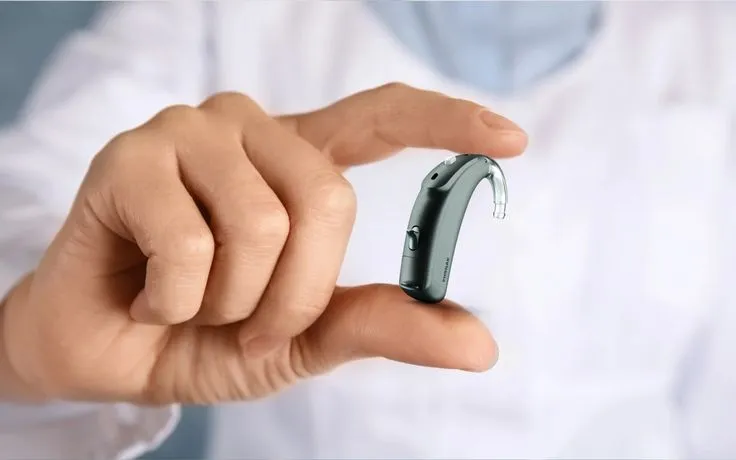
Behind-the-ear hearing aids may consist of a main component that sits behind the ear and an earmould, tube, or suitable ear tip that delivers sound into the ear. These models are available at different amplification levels, meaning that options can be found for a range of needs, from mild hearing loss to severe and profound hearing loss. The exact suitability of a device depends on the power of the specific model, the earmould, and the audiological results. One of their main advantages is that a wide range of technical features and amplification levels can be offered in this format.
BTE models may also be a suitable choice for people who want a device that is relatively easy to put on and remove. Appropriate options are available, particularly for users who have difficulty with hand movements or require a more powerful device. These devices can also be used by children; however, the child’s growth and the fit of the earmould should be checked regularly. Since the device sits behind the ear, it is also useful to consider comfort when wearing it together with glasses, masks, and other accessories.
In-the-Ear Hearing Aids (ITE, ITC, CIC)
In-the-ear hearing aids sit inside the outer ear or within the ear canal. An ITE model may fill the outer part of the ear, an ITC model sits close to the entrance of the ear canal, and a CIC model refers to a compact device that fits deeper inside the canal. One of the main advantages of these devices is that they do not have a separate housing behind the ear. This format may be appealing, especially to adults who care about appearance and prefer a more compact device.
When choosing an in-the-ear hearing aid, it is not advisable to base the decision on appearance alone. Because smaller models have limited space for batteries and electronic components, certain functions and amplification capabilities may vary depending on the specific model. It is also important to consider how well the device fits the ear canal, the presence of earwax or moisture, and whether the user can operate the device comfortably. Although in-the-ear devices may be a convenient choice for some people, a powerful behind-the-ear model may be more suitable for those with more severe hearing loss.
When in-the-ear models are manufactured, the shape of the ear and the size of the ear canal may be taken into account. Therefore, the manufacturing and fitting process can vary depending on the particular model. A comfortable fit is important both for everyday use and for the proper delivery of sound. If you are interested in an in-the-ear hearing aid, first confirm whether your hearing test results indicate that this type of device is suitable for you.
RIC and RITE Hearing Aids
RIC and RITE hearing aids consist of a small housing positioned behind the ear and a receiver located close to the ear canal. These components are connected by a thin wire. This design allows the device housing behind the ear to appear smaller and can make it a comfortable option for many users. Depending on the model, options are available for different degrees of hearing loss.
These devices may be worth considering, particularly for people who prefer a more compact appearance and personalised sound adjustment. At the same time, it is important to keep the receiver and ear tip positioned in the ear canal clean. Because earwax and moisture can affect the device’s performance, users should follow the recommended maintenance and technical inspection guidelines. When making a selection, it is more appropriate to evaluate the device’s power and suitability for the person’s hearing loss and daily needs rather than considering its size alone.
How Can You Choose the Best Hearing Aid?
The best hearing aid is not necessarily the most expensive, the smallest, or the model with the greatest number of features. The most suitable device is one that meets a person’s hearing requirements, daily needs, and comfort expectations. For example, the priorities of someone who frequently makes phone calls at work may differ from those of someone who communicates mainly at home. Phone connectivity and sound streaming may be important for the first person, while simple controls and comfortable fitting may be more important for the second.
The results of an audiological assessment should form the basis of the selection process. After that, the device’s style, technology, programming options, price, warranty, and maintenance conditions can be compared. When speaking with a specialist, explain the situations in which you experience the greatest difficulty in everyday life. This information can help the device be adjusted to your individual needs.
Choosing According to the Degree of Hearing Loss
Hearing loss can be classified as mild, moderate, severe, or profound. These levels are assessed by measuring hearing thresholds at different frequencies. Some in-the-ear and RIC devices may be suitable for mild to moderate hearing loss. In cases of more severe hearing loss, behind-the-ear models with broader amplification capabilities may be preferred.
However, the degree of hearing loss is not the only factor that determines the type of hearing aid. The type of hearing loss—conductive, sensorineural, or mixed—as well as the condition of the ear and speech understanding scores may also be assessed. In some cases, medical treatment or other hearing technologies may be considered in addition to hearing aids. For example, a specialist may evaluate whether a cochlear implant is suitable for certain people with severe or profound hearing loss. Therefore, recommending the same device to everyone would not be appropriate.
Choosing According to Age and Daily Lifestyle
When selecting a hearing aid for a child, factors such as hearing test results, speech and language development, safe device use, and regular monitoring should be considered. As a child grows, the size of the earmould may need to change, so the fit of the device should be checked periodically. It is also important for parents to learn how to put on the device, clean it, and monitor its everyday use. Audiological and developmental support should be planned individually according to the child’s needs.
For older adults, ease of putting on and removing the device, the usability of control buttons, and the type of battery or charging system may be particularly important. People with active lifestyles, those who attend work meetings, or those who spend time in noisy environments may want to explore features that adapt to different listening situations. For people who wear glasses, it is also worth checking whether a behind-the-ear device is comfortable. In this way, the choice should be based not only on hearing levels but also on the person’s real-life needs.
Technology, Comfort and Price
Modern digital hearing aids may include sound processing, programmes for different listening environments, wireless connectivity to phones in some models, and support for additional microphones. However, not all devices have the same features. It is therefore important to compare the technical capabilities of the specific models. If phone calls are one of your main priorities, confirm the device’s compatibility with your phone and its ability to stream audio during calls.
It is also not enough to consider only the purchase price of the device. The warranty, subsequent adjustments, maintenance, availability of spare parts, and repair options can all influence the overall decision. A more expensive hearing aid does not necessarily provide better results for every user; the key issue is how well the model meets your needs. Set your budget in advance and compare alternatives that address the same requirements.
What Makes Digital Hearing Aids Different?
Digital hearing aids process incoming sound electronically and can be programmed according to a person’s hearing test results. This allows the device to amplify different sound frequencies at different levels and, in some models, to adjust settings according to the listening environment. For example, having a conversation in a quiet room is not the same as talking in a restaurant where several people are speaking. A device with suitable technology can be adjusted to meet the user’s hearing needs in such situations.
Some digital hearing aids include features such as environmental sound processing, directional microphones, noise management, and phone connectivity. However, no hearing aid completely eliminates all background noise or fully restores normal hearing. The purpose of a hearing aid is to support hearing and make communication easier. The quality of the results depends not only on the device’s technology but also on correct fitting and adjustment, the individual’s hearing characteristics, and consistent use of the device.
Knowing about hearing aid brands can be helpful when making a choice, but the decision should not be based on the brand name alone. Different brands offer devices with different technologies, models, and amplification capabilities. Not all models from the same brand are suitable for the same degree of hearing loss or the same user requirements. Therefore, it is more appropriate to evaluate the features of a specific device alongside your audiological results.
Avaz Hearing and Speech Center offers hearing aid options from Phonak and Helix. When selecting a device, you can obtain information about options that correspond to your hearing test results, intended use, and daily lifestyle. For details about the availability of a particular model, its technical specifications, price, and warranty conditions, you can contact the center directly.
Phonak Hearing Aids
Phonak hearing aids are known for their range of models designed to meet different user needs. Depending on the model, available options may include behind-the-ear, in-the-ear, and other styles, as well as different amplification levels and additional features. When choosing a device, it is important to consider more than the brand: pay attention to the specific model’s power, programming options, ease of use, and compatibility with other devices, such as phones. Avaz Hearing and Speech Center provides assistance with selecting Phonak hearing aids and obtaining information about available options.
If you need a less visible device, you can ask whether suitable in-the-ear models are available. If you require stronger hearing support, you can explore alternatives with an appropriate level of amplification. The final decision should be based on audiological results and proper fitting. This approach is more appropriate than choosing a device based on its brand name alone.
Helix Hearing Aids
The Helix brand also offers hearing aid options that may be considered for different hearing needs. By obtaining information about the amplification levels, styles, technical features, and prices of the models available at the center, you can compare the options that may be suitable for you. The main objective is to ensure that the device matches your hearing requirements and provides comfort during everyday use. Therefore, it is important to consider not only the appearance and price of the device but also the possibility of professional fitting and adjustment.
If you are looking for a suitable device within your budget, it is helpful to compare different models and learn about their warranty conditions in advance. Since the current prices and availability of devices offered by the center may change, obtaining information directly about a specific model will provide more accurate results. If you are going to use a hearing aid for the first time, make sure you also take time to learn how to put it on, remove it, clean it, and use it correctly.
Common Mistakes When Choosing a Hearing Aid
One of the most common mistakes is choosing a device based solely on its small size and appearance. Appearance may be important to the user, but the device’s amplification power and comfort in relation to their hearing loss are more important. A small model may be an excellent choice for some people, but it may not provide the amplification required by someone else. Therefore, before choosing a device style, its suitability should be assessed with a specialist.
Another mistake is assuming that an inexpensive device is automatically good value or that an expensive device is automatically better. The quality of a device is closely related to how suitable it is for the individual user. It can also be a mistake to assume that no further adjustments will be needed after purchasing a hearing aid. Some users may need the volume levels or programmes to be adjusted again later.
A third important mistake is purchasing a hearing aid without an examination or selecting one at random. Hearing loss can have different causes, and in some cases, a medical assessment is required before using a device. In particular, if you experience sudden hearing loss, ear pain, discharge, or a significant change in hearing, you should seek medical attention rather than choosing a device on your own. Proper assessment is the foundation of choosing a suitable hearing aid.
How Should You Care for Your Hearing Aid?
Daily care is essential for ensuring that a hearing aid continues to work properly over time. Earwax, moisture, and dust accumulating on the device can affect sound transmission. For this reason, the device should be cleaned according to the manufacturer’s instructions and stored in a safe, dry place when not in use. Do not immerse the device in water, use unsuitable cleaning products, or leave it near a direct heat source.
For devices that use disposable batteries, monitor the battery condition. For rechargeable models, follow the recommended charging instructions. If a problem occurs with the ear tip, earmould, or receiver, do not attempt to disassemble the device yourself. If the sound becomes weaker, crackling occurs, or the device no longer works as it did before, check the instructions and contact a specialist if necessary. Regular technical inspections can help support the proper functioning and comfortable use of the device.
Choosing a Hearing Aid at Avaz Hearing and Speech Center
If you are having difficulty choosing a hearing aid, the first step is not to compare different models at random but to clarify your hearing needs. Avaz Hearing and Speech Center is a center you can contact to have your hearing-related needs assessed and obtain information about suitable hearing aid options. You can learn about the available Phonak and Helix devices and compare the features and prices of different models.
When contacting the center, it is helpful to explain which sounds you have difficulty hearing in everyday life, whether the difficulty affects one or both ears, and what you expect from a hearing aid. If you have had a hearing test before, bring the results with you. This information can help the specialist assess your needs more accurately. Once the suitability of a device has been determined, it is also important to receive instructions on how to put it on, operate it, and care for it.
Contact Us for a Hearing Assessment and Hearing Aid Selection
If hearing loss is making everyday communication difficult, do not ignore it. Choosing a suitable hearing aid can help you participate more comfortably in conversations, hear family members more clearly, and take part in daily activities. The sooner an appropriate assessment is carried out, the sooner you can explore solutions that meet your needs.
Contact Avaz Hearing and Speech Center to learn about hearing aids suited to your hearing needs and work with a specialist to select the option that is right for you.
Website: https://avazgroup.az/
You can find information about the center’s addresses, contact numbers, and appointment options on the website.
Conclusion
There is no single best type of hearing aid for everyone with hearing loss. In-the-ear devices may be suitable for people who prefer a more compact appearance, while behind-the-ear models offer a range of amplification levels and practical usage options. RIC and RITE devices combine a smaller behind-the-ear housing with a receiver positioned close to the ear canal. The most suitable type should be determined based on the person’s hearing loss, ear condition, daily needs, and individual fitting requirements.
When choosing between Phonak and Helix hearing aids, pay attention not only to the brand and price but also to the specific model’s features, comfort, warranty, and technical support options. You can contact Avaz Hearing and Speech Center to learn about the available devices and compare options that meet your needs. Remember: a properly selected and fitted hearing aid can make everyday communication easier, but the results depend on individual hearing characteristics.
Frequently Asked Questions (FAQ)
1. What Is the Best Hearing Aid for Hearing Loss?
There is no single device that is equally suitable for everyone. The choice should be based on the degree and type of hearing loss, the user’s age, and their daily needs. It is more appropriate to compare suitable models after an audiological assessment.
2. Which Is Better: An In-the-Ear or a Behind-the-Ear Hearing Aid?
In-the-ear hearing aids may offer a more compact appearance, while behind-the-ear models are available with different amplification levels and can provide practical ease of use. Which option is better depends on the individual’s hearing test results and needs.
3. How Much Do Hearing Aids Cost?
Prices vary depending on the brand, model, technical features, and service conditions. To find out the current prices of the Phonak and Helix models available at Avaz Hearing and Speech Center, it is recommended that you contact the center directly.
4. Do Hearing Aids Fully Restore Normal Hearing?
Hearing aids help people hear by amplifying and processing sounds, but they do not fully restore normal hearing. The results depend on the type and degree of hearing loss and how accurately the device has been fitted and adjusted.
5. Is a Hearing Assessment Necessary Before Choosing a Hearing Aid?
Yes, an audiological assessment is essential for determining which hearing aid is suitable. The assessment helps identify the characteristics of the hearing loss and evaluate appropriate options. If sudden hearing loss occurs, urgent medical evaluation should be sought.